Behavioral competencies
What Are Behavioral Competencies?
A behavioral competency is a soft skill or personal trait that directly affects how someone behaves in the workplace. These are not job-specific skills like using accounting software or operating machinery. Instead, they describe how people carry out their tasks, interact with others, and respond to challenges.
Behavioral competencies are commonly assessed during:
- Hiring (through behavioral interviews)
- Performance reviews
- Leadership development
- Promotion decisions
Common Behavioral Competencies
Here are examples of core behavioral competencies:
Communication – The ability to clearly express ideas, listen actively, and adapt messaging to different audiences.
Teamwork – Willingness to collaborate, support others, and work effectively within a group to achieve shared goals.
Accountability – Taking ownership of responsibilities, meeting deadlines, and being answerable for results and actions.
Adaptability – Being flexible in response to change, learning new methods quickly, and staying composed under pressure.
Problem-Solving – Identifying challenges, analyzing situations logically, and finding practical solutions.
Leadership – Guiding, motivating, and influencing others, even without a formal title. This includes delegating effectively and making confident decisions.
Emotional Intelligence – Understanding and managing one’s own emotions, as well as recognizing and responding appropriately to the emotions of others.
Initiative – Taking proactive steps to improve work or solve issues without needing to be asked. Decision-Making – Evaluating options, considering consequences, and making timely and informed choices.
Integrity – Acting with honesty, ethics, and consistency in all workplace interactions.

Why Behavioral Competencies Matter in the Workplace
Behavioral competencies determine how well someone performs beyond their technical abilities. Here’s how they benefit both the company and the employee:
For Employers:
- Improve Hiring Quality: Resumes show experience. Behavioral competencies show fit. They help identify whether a candidate can handle pressure, work in teams, or deal with clients professionally.
- Reduce Turnover: Employees who align with company values and behave consistently well are less likely to leave or underperform.
- Create Fair, Consistent Reviews: Competency-based appraisals help managers give structured, evidence-based feedback.
- Build a Strong Culture: Defining and reinforcing behavioral expectations helps shape your workplace environment and company brand.
For Employees:
- Clearer Expectations: Employees know what’s valued, not just what tasks to complete.
- Better Career Growth: Behavioral feedback helps employees grow into leadership roles.
- Stronger Relationships: Good behaviors improve teamwork, communication, and collaboration across departments.
Behavioral Competencies in the UAE and GCC
In multicultural teams and dynamic sectors like banking, logistics, tech, government, and hospitality behavioral competencies are critical.
They help companies in the region:
- Hire beyond CVs, focusing on mindset and adaptability
- Promote inclusivity in multinational teams
- Reduce miscommunication across cultures and departments
- Identify high-potential talent early and develop future leaders
For example, an adaptable employee in a Dubai-based logistics firm can easily handle last-minute regulatory changes. Or a sales professional with strong emotional intelligence can build trust with clients across nationalities in Qatar.
Behavioral vs. Technical Competencies
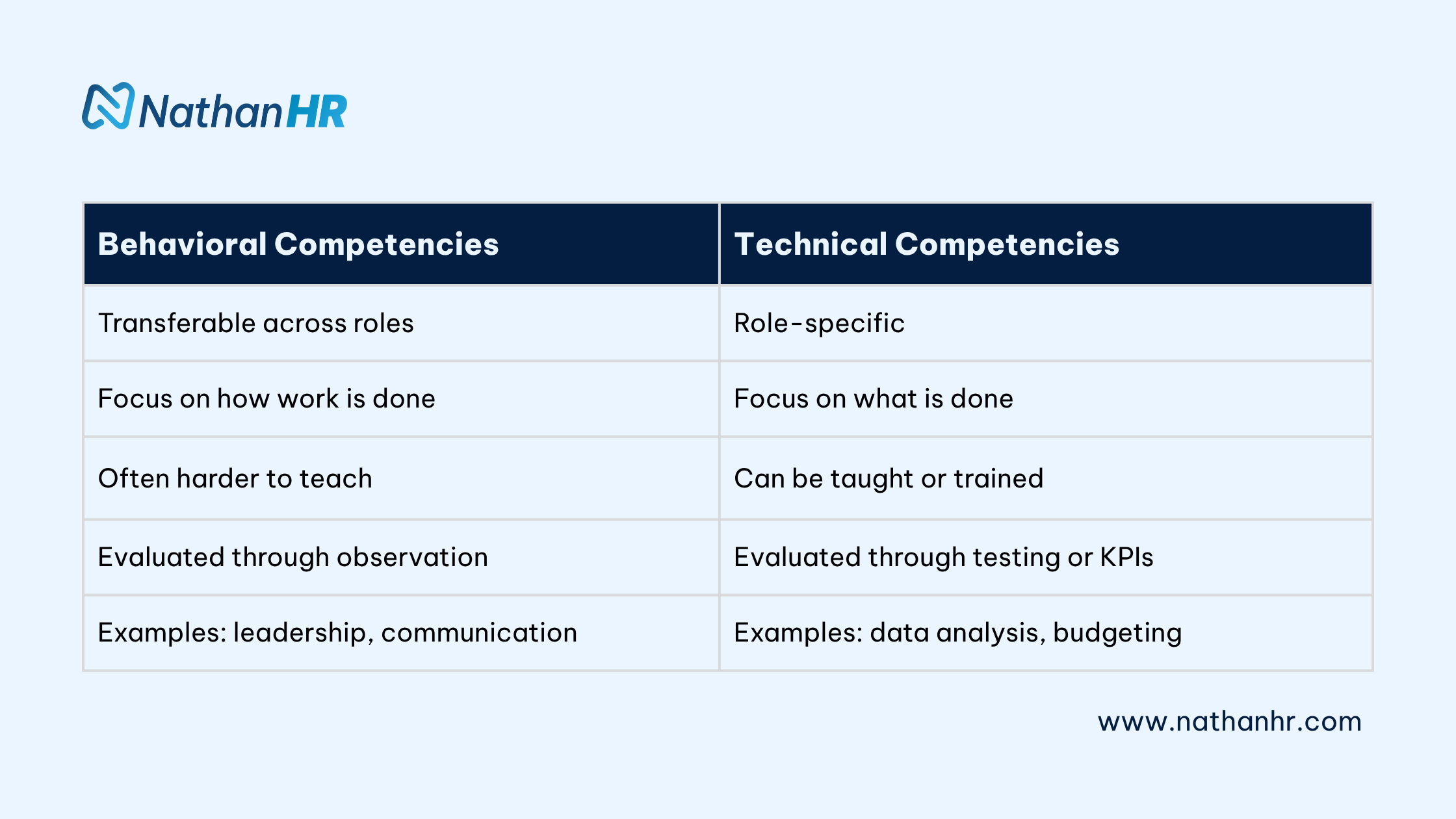
Both matter, but behavioral competencies often determine long-term success, especially in leadership roles or team-based environments.
How HR Teams Use Behavioral Competencies
Here’s how behavioral competencies show up across the employee lifecycle:
Recruitment
Used to assess candidates during behavioral interviews. For example: “Tell me about a time you dealt with a difficult coworker.” This helps identify how they manage conflict, communicate, and stay professional.
Performance Reviews
HR teams and managers use defined competencies to measure how employees behave on the job not just what targets they hit.
Promotion Decisions
Promotions are increasingly based on behavior, not just tenure. Is the employee reliable? Can they lead others? Behavioral competencies offer a fair way to decide.
Training & Development
Companies create development plans around competencies. If an employee struggles with accountability, training might focus on goal setting and ownership.
Leadership Development
Behavioral data helps spot future leaders who show initiative, resilience, and decision-making ability even before they manage teams.
Final Thoughts
Behavioral competencies shape how people perform, grow, and interact at work. They’re not just “nice to have” they are essential for building teams that are adaptable, dependable, and aligned with your business goals.
Whether you’re hiring, training, or leading, focusing on behavioral competencies helps you build better teams and reduce risk especially in today’s competitive and culturally diverse markets
FAQs
Can behavioral competencies be learned?
Yes, with consistent feedback, coaching, and real-world experience. Unlike fixed traits, most behaviors can be improved.
Are they used in every job?
Yes. Whether you're hiring for customer service or executive leadership, every job requires a set of behavioral competencies to succeed.
How are they assessed?
Through behavioral interview questions, peer reviews, self-assessments, and observation over time.
Can I list behavioral competencies on my CV?
Yes, especially when tied to real examples: "Led a cross-functional team through a project relaunch (Leadership, Teamwork, Accountability).”