Contract employee
What is a Contract Employee?
A contract employee is a professional hired by a company for a specific period of time or to complete a defined project. Unlike permanent employees, contract employees are not part of the long-term workforce and typically do not receive benefits like paid leave, gratuity, or health insurance unless these are included in the contract or managed through a staffing agency.
In today’s flexible work landscape, contract employees help businesses meet short-term needs, scale teams quickly, and access specialized talent especially in industries like events, technology, logistics, healthcare, and creative services.
Definition of a Contract Employee
A contract employee is:
- Hired for a fixed duration (e.g., 3, 6, or 12 months) or a project
- Not part of the company’s permanent payroll
- Paid based on a contractual agreement
- May be employed directly or through a staffing agency or Employer of Record (EOR)
They can work full-time, part-time, onsite, or remotely, depending on the nature of the assignment.
What’s Included in a Contract Employment Arrangement?
A contract employee usually works under a clearly defined agreement that outlines:
- Start and end date
- Role and responsibilities
- Compensation terms (hourly, daily, or monthly rate)
- Payment method and schedule
- Working hours and expectations
- Termination or renewal clauses
- Confidentiality, NDAs, or IP ownership (if applicable)
This agreement protects both the employer and the contractor by clearly outlining the expectations and deliverables.
How Contract Employees Differ from Permanent
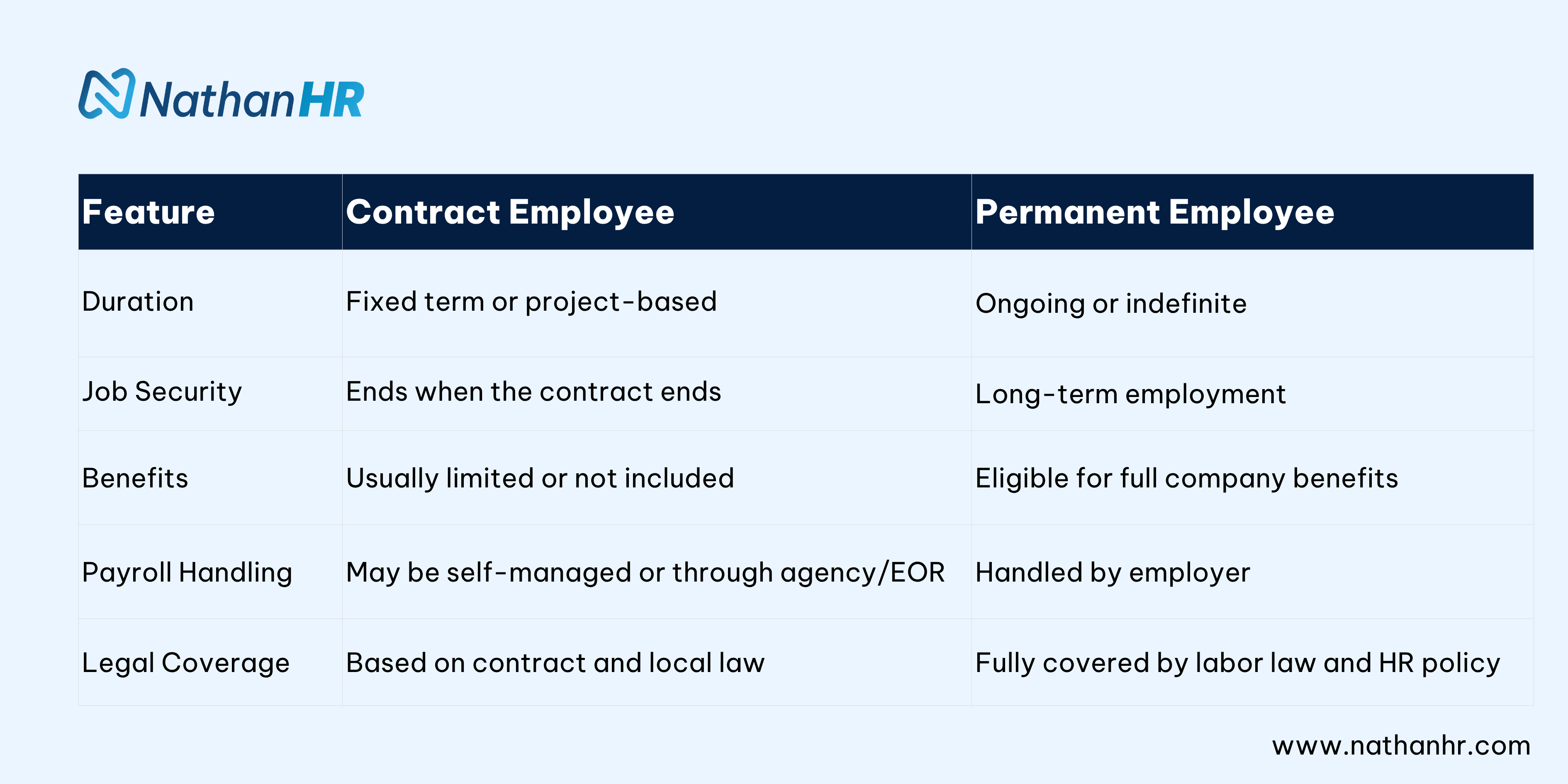
Contract employees offer flexibility and speed, while permanent employees offer long-term continuity and integration.
Why Companies Hire Contract Employees
1. Flexibility to Scale
Contract roles help businesses manage workload fluctuations without committing to permanent headcount.
2. Faster Hiring
The hiring and onboarding process for contract staff is usually quicker, allowing urgent projects to start without delay.
3. Access to Specialized Talent
Need a digital strategist for a campaign? Or an event manager for a product launch? Contracting gives companies access to highly skilled professionals for short-term needs.
4. Cost-Efficiency
Contract employees often cost less overall, as employers save on long-term benefits, pensions, and overheads.
5. Reduced Compliance Risk (when using a staffing partner)
Partnering with a staffing agency or EOR helps businesses stay compliant with labor laws, visa rules, and payroll processing.
Contract Employees in the UAE and Middle East
Contract staffing is very common in the UAE and GCC due to seasonal demand, project-based work, and visa regulations.
Key Notes:
- Labor law compliance is still required even for non-permanent roles
- Visa sponsorship may be provided by a licensed staffing company or EOR
- End-of-service benefits are typically not offered unless stated in the agreement
- Wages must be paid through the Wage Protection System (WPS) if mandated
Hiring through a staffing partner helps companies manage these details seamlessly and stay compliant.
What Should Be in a Contract Employment Agreement?
A clear contract should include:
- Start and end dates
- Defined deliverables or KPIs
- Compensation structure and payment frequency
- Work location (remote, onsite, hybrid)
- Ownership of any work produced
- Dispute resolution and termination clauses
- Confidentiality, data protection, and IP rights (if needed)
This ensures alignment and avoids legal disputes.
Advantages and Disadvantages of Contract Employment
Advantages
Flexibility for Employers and Talent - Scale teams quickly, fill gaps, or take on freelance work on your own terms.
Faster Hiring Cycles - Skip lengthy onboarding ideal for urgent project needs.
Cost Control - No long-term benefits or severance obligations for the employer.
Access to Expertise - Hire highly skilled professionals for short-term or technical roles.
Try-Before-You-Hire Option - Assess performance before committing to a full-time offer.
Disadvantages
Job Insecurity for the Employee - Once the contract ends, there’s no guarantee of renewal.
No Benefits (Unless Outsourced Through Agency) - Most contract employees don’t receive health insurance, leave, or gratuity.
Reduced Cultural Integration - Contractors may not feel as engaged or included in long-term strategy or company culture.
Risk of Compliance Issues - If not structured properly, companies may face visa, tax, or labor law violations.
High Turnover - Short-term hires lead to more frequent onboarding and handovers.
Is Contract Employment Right for You?
For Employers:
Yes, if you need short-term help, seasonal staff, or experts for special projects without the commitment of permanent hiring.
For Job Seekers:
Contract roles are ideal if you value flexibility, are building your portfolio, or want to explore different industries and companies.
Final Thoughts
A contract employee is not just a temporary worker, they're a valuable, skilled contributor to modern, agile teams.
Whether you’re launching a product, filling a skills gap, or managing a seasonal surge, contract staffing helps you stay responsive and efficient.
But to do it right, it’s important to have:
- Clear contracts
- Legal compliance
- Reliable staffing support
Done well, contract employment delivers results for both the company and the individual.
Frequently Asked Questions (FAQs)
What is the difference between a contract employee and a freelancer?
A contract employee is typically hired for a specific period under a structured agreement, often with defined working hours, deliverables, and reporting lines. A freelancer, on the other hand, is self-employed and usually works independently on multiple short-term projects with more control over their schedule and process.
Can a contract employee receive benefits like health insurance or leave?
Usually, contract employees do not receive benefits like paid leave, health insurance, or end-of-service gratuity unless explicitly included in their contract or provided by a staffing agency or Employer of Record (EOR).
Is a contract employee entitled to severance or gratuity pay in the UAE?
In the UAE, gratuity is generally not mandatory for short-term contract employees unless stated in the contract or if they meet minimum duration and legal criteria. Employers should always clarify this in the agreement.
Can a contract employee be hired on a visit visa in the UAE?
No. Hiring someone on a visit visa is illegal in the UAE. Contract employees must have the appropriate employment visa, which can be arranged by the company or a licensed staffing agency or EOR.
Can a contract employee be converted to a permanent role?
Yes. Many companies use contract roles as a trial period. If the employee performs well and there’s a long-term business need, the company may offer a full-time position at the end of the contract.