.png&w=3840&q=75)
Employee onboarding shapes how new employees engage, perform, and stay with a company, studies show up to 20% of hires leave within the first 45 days when onboarding is ineffective. Key practices include starting preboarding early, setting clear goals, and introducing company culture, while virtual teams benefit from video introductions and assigning a buddy. Implementing these strategies helps new hires feel supported, connected, and ready to contribute from day one.
Employee onboarding is one of the most influential parts of the employee experience, yet many companies still treat it as a formality. A quick orientation. A stack of documents. A rushed first-day tour.
But employee expectations have changed, today’s workforce wants clarity, support, structure, and a workplace that makes them feel valued from day one. Employers who deliver that see stronger performance, lower turnover and faster integration.
This guide breaks down what onboarding really means, why it matters, and the best practices that help companies create a smooth, engaging, and effective employee onboarding process.
What is Employee Onboarding?
Employee onboarding is the structured process of preparing, integrating, and supporting new hires as they transition into their roles and the company culture.
It goes far beyond paperwork. Strong onboarding includes:
-
helping new hires understand their role and what success looks like
-
introducing them to the company’s values and culture
-
giving them the tools and training they need
-
connecting them with the right people
-
ensuring they feel welcomed, prepared, and confident
Onboarding begins the moment a candidate signs the offer and continues through the first 30-90 days. Some companies extend it to the first six months to reinforce expectations and support long-term success.
Onboarding vs. Orientation: Understanding the Difference
Many organizations use the terms orientation and onboarding interchangeably, but they serve very different purposes and confusing them can limit the effectiveness of your new hire experience.
Employee orientation is short-term and administrative. It typically happens on the first day or within the first few days of employment. Its main focus is to:
-
Introduce company policies and procedures
-
Complete compliance paperwork and legal formalities
-
Provide a general overview of the organization
-
Cover basic logistics such as IT setup, security access, and workspaces
Orientation is necessary, but it’s just the first step. It ensures new hires have the information they need to start work, but it doesn’t guarantee they will feel connected, confident, or motivated.
Employee onboarding, on the other hand, is a long-term, structured process that extends beyond the first week or even the first 90 days. It focuses on helping new employees truly integrate into the company. Effective onboarding includes:
-
Role-specific training: Ensuring employees understand responsibilities, workflows, and tools
-
Cultural integration: Communicating company values, mission, and workplace norms
-
Performance alignment: Setting clear expectations, goals, and success metrics
-
Relationship-building: Connecting new hires with managers, mentors, and colleagues to foster belonging
In short, orientation gets new hires started; onboarding ensures they thrive. Understanding this distinction allows HR teams to design programs that go beyond compliance and create real business impact.
Why Employee Onboarding Matters
Effective onboarding is one of the most powerful tools HR and business leaders have to improve retention, engagement, and productivity. Its impact is measurable and often immediate.
1. Reduces early turnover
Many new hires leave because they feel unsupported, isolated, or unclear about their role. A structured onboarding process fills these gaps, helping employees feel confident and connected from the start.
2. Accelerates productivity
Employees perform best when they clearly understand expectations, workflows, and priorities. Thoughtful onboarding provides training, guidance, and clarity, turning new hires into contributors faster.
3. Boosts engagement
When employees feel welcomed, guided, and valued early on, they are more motivated, invested, and connected to their team.
4. Promotes consistency
A standardized onboarding process ensures every new hire receives the same level of support, no matter the department or manager, creating a more reliable and efficient experience.
5. Strengthens employer branding
A positive onboarding experience doesn’t just help the employee it becomes a story they share with friends, colleagues, and future talent. Companies known for great onboarding attract better candidates and build stronger loyalty.
Investing in onboarding gives organizations a clear advantage: happier employees, faster integration, and stronger long-term performance.
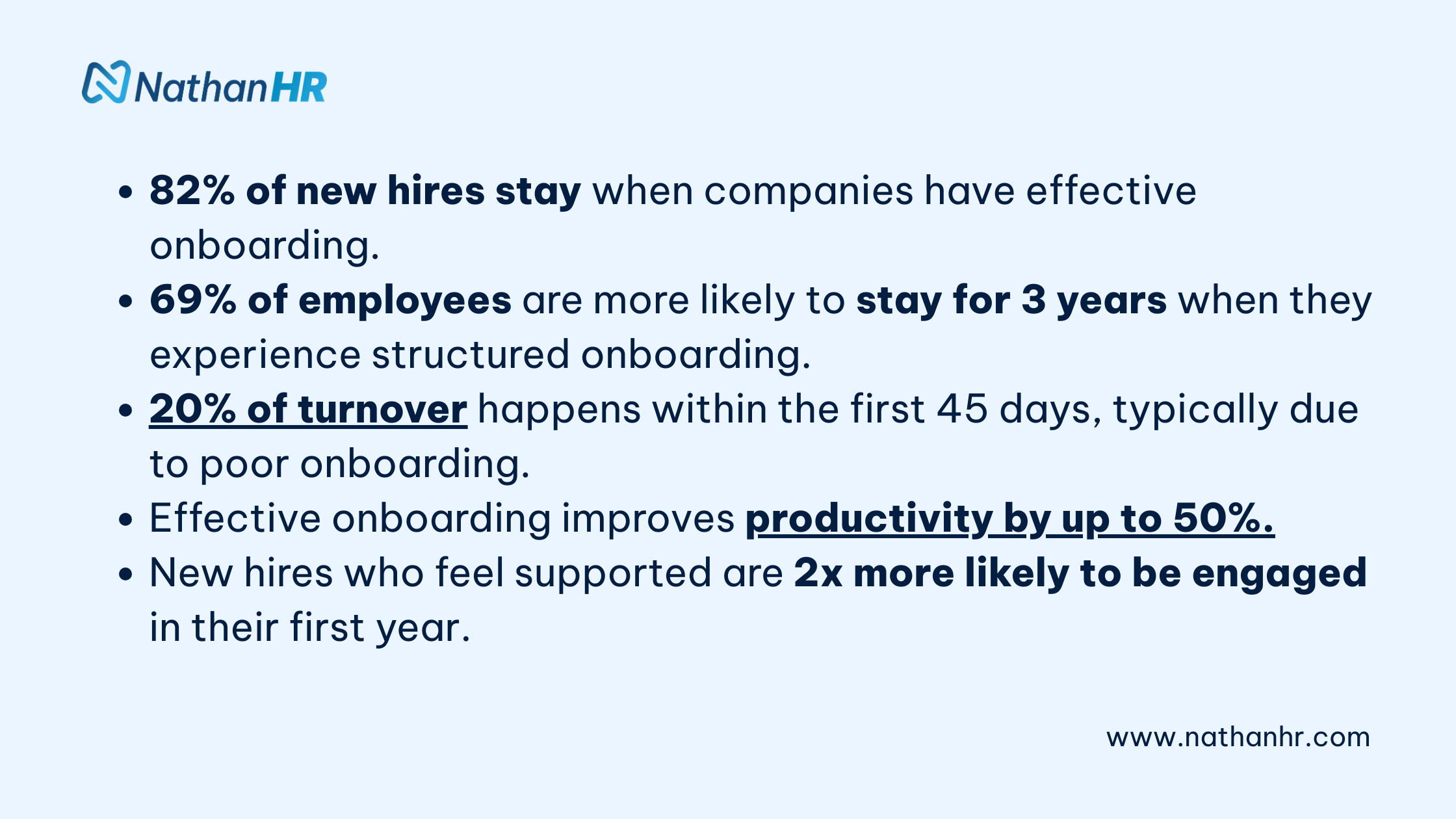
Key Employee Onboarding Statistics: What the Data Shows
These numbers highlight a clear pattern: onboarding is not optional. It is a critical business function that directly shapes performance and retention.
Stages of a Strong Employee Onboarding Process
A well-structured onboarding process typically includes four stages. Each one contributes to a smooth, confident transition for the new hire.
1. Pre-Onboarding: Before the First Day
Pre-onboarding shapes the new hire’s first impression. It builds confidence, reduces anxiety, and prepares them for a smooth start.
What this stage includes:
-
sending a welcome email with the first-day schedule
-
sharing an onboarding checklist
-
preparing their laptop, credentials, and tools
-
completing documentation ahead of time
-
introducing them to key contacts
-
giving clarity on what to expect in week one
This stage sets the tone. It tells new hires that the company is ready for them and that their arrival matters.
2. The First Day: Creating a Meaningful Welcome
Day one is about connection and clarity. It is not the time to overwhelm new hires with information. Instead, it should be organised, simple, and warm.
Key elements of a great first day:
-
a personal welcome from the manager or HR
-
introductions to the team
-
a guided walkthrough of the workspace or virtual tools
-
an overview of company values, culture, and mission
-
a breakdown of what the first week looks like
-
a check-in at the end of the day to address questions
The goal is simple: make them feel seen, included, and excited.
3. The First Week: Building Comfort and Understanding
This stage helps new hires adjust to the role and understand their responsibilities.
What HR and managers should cover:
-
role expectations and early deliverables
-
walkthroughs of systems, workflows, and tools
-
introductory training sessions
-
regular check-ins to answer questions
-
introductions to cross-functional teams
-
a realistic workload that gives space to learn
The first week is where confidence grows. With the right support, new hires settle in quickly and feel secure in their decision to join.
4. The First 30–90 Days: Deep Integration and Performance Alignment
The onboarding process shouldn’t end after week one. The first 90 days define long-term retention and performance.
What this stage includes:
-
a 30-60-90 day plan with clear goals
-
check-ins with the manager to review progress
-
targeted skill training
-
participation in team meetings and projects
-
ongoing feedback from HR and the manager
-
opportunities for the employee to share their experience
-
social and cultural integration
When new hires receive consistent support in this period, they become confident, capable contributors.
Employee Onboarding Best Practices
These onboarding practices help companies set new hires up for success, create a positive first experience, boost engagement, and improve long-term retention.
When implemented thoughtfully, they ensure employees feel supported, connected, and confident from day one.
Start early
Onboarding begins before Day One. Preboarding, such as sending welcome materials, introducing key contacts, or setting up accounts, reduces first-day anxiety and builds excitement. Early communication also allows new hires to hit the ground running and feel like part of the team even before their first day.
Personalize the experience
Every employee is different. Tailor onboarding to the role, team, and individual experience level. Personalized programs like role-specific training, department introductions, or mentoring pairings create a stronger sense of belonging and improve engagement compared to generic, one-size-fits-all approaches.
Focus on culture
Culture isn’t just an abstract concept, it’s how employees connect to the organization. Early exposure to company values, mission, and purpose helps new hires understand what the organization stands for and how they can contribute meaningfully. This alignment encourages engagement and loyalty from the start.
Involve managers
Managers are central to a successful onboarding experience. Regular check-ins, clear communication of expectations, and ongoing guidance ensure employees understand their roles and feel supported. Engaged managers foster confidence, motivate teams, and help prevent early disengagement.
Use technology wisely
Digital tools can make onboarding seamless, especially for remote or hybrid teams. HR platforms, task trackers, and collaboration tools streamline administrative tasks, track progress, and ensure a consistent experience for every new hire. Technology also allows employees to access resources at their own pace, reducing confusion and delays.
Pace the schedule
Too much information at once can overwhelm new hires. Spread training, introductions, and task assignments over days or weeks to allow learning to stick. Phased schedules help employees absorb knowledge, ask questions, and gradually take on responsibilities with confidence.
Assign a buddy or mentor
Pairing new hires with experienced colleagues helps them navigate culture, systems, and workflows. Buddies provide guidance, answer questions, and offer social support, helping employees feel connected and reducing the risk of isolation especially important in larger or remote teams.
Use a 30-60-90 day roadmap
Providing a clear roadmap gives employees structure and clarity. Short-term goals (30 days) help them understand immediate priorities, while medium and long-term goals (60–90 days) outline performance expectations and growth opportunities. Roadmaps also create measurable milestones that make early progress visible to both the employee and manager.
Collect feedback
Onboarding should be iterative. Regularly ask new hires about their experience through surveys, check-ins, or informal conversations. This feedback identifies gaps, improves processes, and shows employees that their opinions matter, further enhancing engagement.
Treat onboarding as a journey
Onboarding isn’t just a one-week event, it’s a continuous process. Continued support, learning opportunities, and scheduled check-ins help employees integrate fully, maintain motivation, and contribute at a high level long-term. Treating onboarding as a journey builds loyalty, strengthens culture, and maximizes the return on your hiring investment.
Additional Tips for Onboarding Remote Teams Virtually
Onboarding remote employees comes with unique challenges. Without in-person interactions, it’s easy for new hires to feel isolated, confused, or disconnected.
A thoughtful virtual onboarding strategy ensures remote team members feel supported, engaged, and ready to contribute.
Use video for personal connection
Schedule video introductions with the team and manager. Seeing faces and hearing voices builds rapport, reduces isolation, and humanizes the experience.
Provide a clear roadmap
Outline a structured 30-60-90 day plan. Include role expectations, training milestones, and check-in points. Clear guidance keeps remote hires focused and confident.
Assign a virtual buddy or mentor
Pair new hires with an experienced colleague who can answer questions, provide guidance, and introduce them to team culture. Encourage regular video or chat check-ins.
Leverage technology
Use collaboration tools (Slack, Teams, Notion, or similar) for communication, task tracking, and sharing resources. Ensure all software accounts and access are ready before Day One.
Schedule regular check-ins
Frequent one-on-one meetings with managers help address questions, provide feedback, and reinforce engagement. Don’t leave remote employees to figure things out on their own.
Make culture visible
Share videos, stories, or virtual team events that showcase company values and social interactions. Encourage participation in online social activities or interest-based channels.
Provide accessible training resources
Offer e-learning modules, recorded sessions, and easy access to internal knowledge bases. This allows remote hires to learn at their own pace while staying aligned with team expectations.
Encourage social connection
Virtual coffee chats, team games, or icebreaker sessions help new hires bond with colleagues and feel part of the community.
Collect feedback on virtual onboarding
Ask remote employees about their onboarding experience through surveys or informal check-ins. Use this feedback to continuously improve the process.
Conclusion
Employee onboarding is far more than a checklist, it is a strategic HR function that sets the tone for the entire employee experience. When done well, onboarding influences retention, accelerates productivity, boosts engagement, and strengthens your employer brand.
For employers, investing in structured, human-centered onboarding programs pays dividends from day one. New hires feel confident in their roles, connected to their teams, and aligned with company values. They are more motivated, more productive, and more likely to stay long-term.
The benefits extend beyond individual employees: teams become more cohesive, managers spend less time addressing confusion or disengagement, and organizations build a reputation as employers of choice.
Ultimately, effective onboarding is an investment in people that drives measurable business growth, creates a culture of excellence, and positions companies for sustained success.

%20(1).png&w=3840&q=75)
.png&w=3840&q=75)
%20(1).png&w=3840&q=75)