Job Offer Letter
What is a Job Offer Letter?
A Job Offer Letter is a formal written document an employer sends to a candidate to confirm their intention to hire them. It summarizes the main terms of the role, like salary, start date, benefits, and conditions so both sides clearly understand what is being offered before the official employment contract is prepared.
Think of it as the first formal step between interviewing and actually joining the company. It sets expectations, provides transparency, and helps candidates make informed decisions.
Although not as detailed as an employment contract, a job offer letter is still a critical part of the hiring process and serves as a point of reference for both the employer and the candidate.
What a Job Offer Letter Typically Includes
A strong job offer letter normally covers:
1. Job Information
-
Job title
-
Department/team
-
Reporting line
2. Start Date
A proposed joining date or a conditional timeline (e.g., subject to notice period or visa processing).
3. Salary and Compensation
-
Base salary
-
Pay frequency
-
Bonuses, commissions, allowances (if applicable)
4. Benefits
-
Health insurance
-
Annual leave entitlement
-
Allowances (housing, transport, mobile, etc.)
-
Pension or end-of-service benefits
5. Working Hours and Location
Details about the work schedule, days, and workplace arrangement (office, hybrid, remote).
6. Probation Period
Length of probation and any specific terms that apply during this period.
7. Notice Period
How termination works during and after probation.
8. Conditions of the Offer
This can include:
-
Reference checks
-
Medical testing (if required)
-
Work permit or visa approval
9. Acceptance Instructions
Clear steps on how to accept: sign and return, reply by email, or submit documents.
A deadline is usually included.
Why a Job Offer Letter Matters
For the Candidate
-
Clarifies what’s being offered
-
Helps them compare roles or negotiate
-
Sets clear expectations before joining
For the Employer
-
Documents what was agreed
-
Reduces misunderstandings
-
Moves the hiring process forward smoothly
-
Shows professionalism and structure
Types of Job Offer Letters
-
Verbal offer (to be followed by written confirmation)
-
Written job offer letter
-
Conditional job offer
-
Combined offer + contract (used by some employers)
In the UAE, a job offer letter is often required before submitting work permits and generating the official MOHRE or Free Zone employment contract.
It helps ensure both parties agree to the terms before government processes begin.
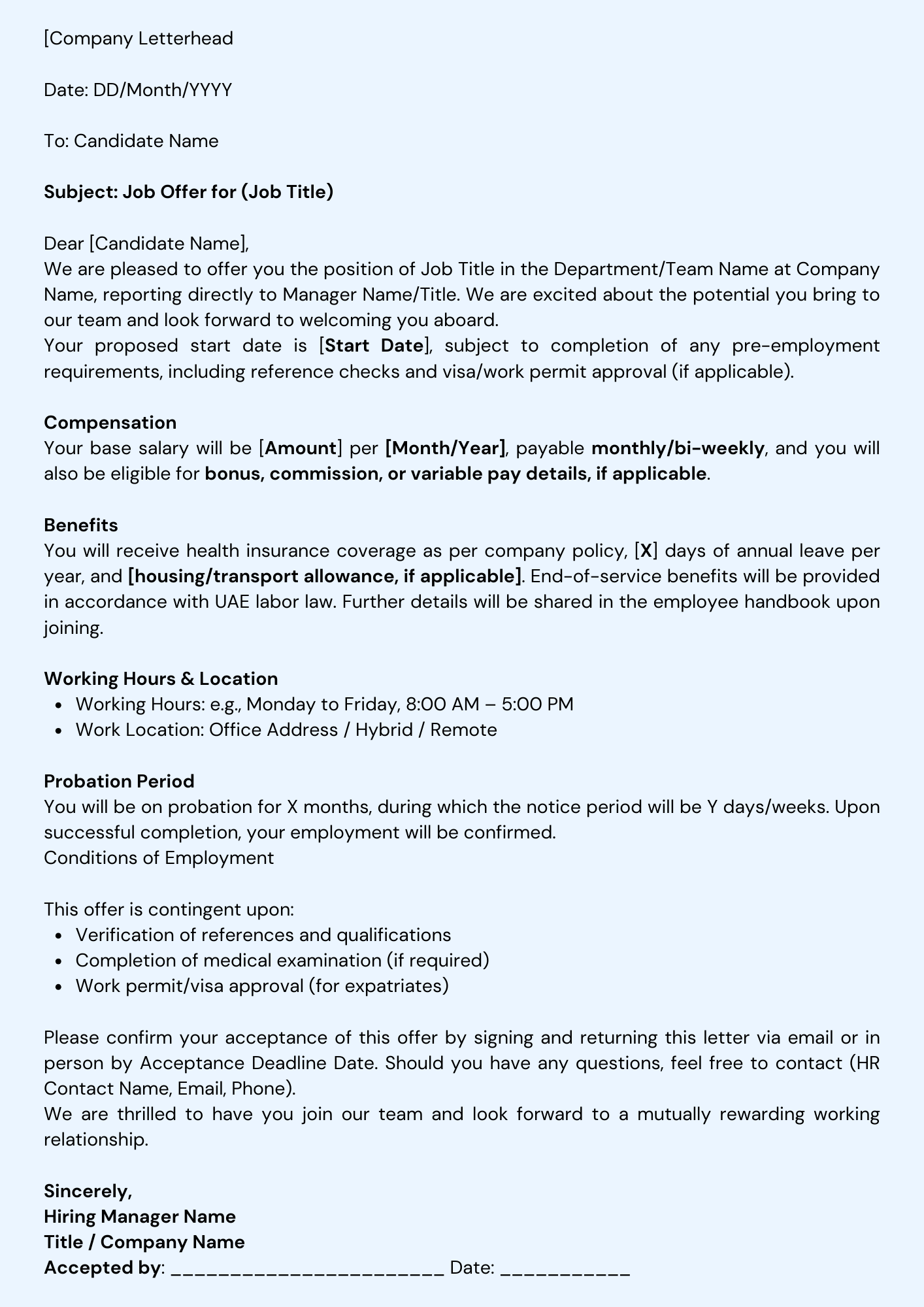
Job Offer Letter Sample
Here is a standard job offer sample:
Tips for Crafting a Good Job Offer Letter
A well-written job offer letter builds trust, reduces unnecessary back-and-forth, and sets the tone for the candidate’s first real experience with your company.
It signals professionalism, transparency, and respect, all qualities that influence whether a candidate accepts the offer and how they feel when they join.
Below are practical tips to help employers craft a strong, clear, and candidate-friendly job offer letter.
1. Be Clear and Straightforward
Avoid jargon, overly legal language, or complicated phrases. The letter should feel easy to read, even for someone who is new to the working world or unfamiliar with HR terminology.
2. Keep All Key Details in One Place
Candidates should be able to understand the essentials; job title, salary, start date, working hours, benefits, probation period, and conditions without searching through emails or asking for clarifications.
A clean, structured format makes the offer feel more professional and reduces misunderstandings later on.
3. Personalize the Opening
Start with a warm and human introduction. A simple line such as “We’re excited to offer you the position of…” creates a welcoming tone and strengthens the candidate’s connection to the company.
Personal touches matter, especially in competitive job markets.
4. Match the Letter to What Was Agreed in Interviews
One of the easiest ways to lose a candidate is to present an offer that doesn’t match what was discussed, even small differences can break trust.
Double-check everything:
-
Salary
-
Job title
-
Benefits
-
Hybrid/remote policies
-
Allowances
-
Start date
Accuracy shows professionalism.
5. Be Transparent About Conditions
If certain steps must be completed before the job becomes official (such as background checks, reference checks, or visa approval), state them clearly.
Being upfront prevents surprises and protects both parties.
Transparency always builds long-term trust.
6. Use Clear Salary Formatting
Present salary information in a simple, structured way. Being specific and consistent helps avoid future disputes or confusion.
Include:
-
Salary amount
-
Currency
-
Pay frequency (monthly, bi-weekly, etc.)
-
Any variable pay (bonuses, incentives, commissions)
Consider formatting it as a clean bullet list inside the letter.
7. Highlight Key Benefits Simply
List the major benefits clearly, for example:
-
Health insurance
-
Leave entitlement
-
Annual bonus eligibility
-
Housing or transport allowance
-
End-of-service benefits
You don’t need to include full policy details here; those can be shared after acceptance or during onboarding. The goal is to give the candidate a clear summary.
8. Include a Real Human Contact
Offers feel more reassuring when a specific person is assigned to answer questions. Include the name, email, and phone number of either the HR representative or hiring manager.
This shows you’re available and supportive throughout the decision-making process.
9. Add a Friendly, Warm Closing
End the letter in a way that feels genuine and motivating. A short closing like:
“We look forward to welcoming you to the team.”
or
“We’re excited for what we can achieve together.”
This human touch can make the offer feel more personal and more likely to be accepted.
10. Keep the Tone Professional but Human
Aim for a balance: respectful, clear, and warm without being overly formal or stiff. Your tone should make the candidate feel valued and respected, not overwhelmed or intimidated.
A human tone reflects a healthy workplace culture.
11. Make the Letter Visually Easy to Scan
Use short paragraphs, bullet points, and clear section headings. Candidates often review offer letters multiple times; a structured layout makes everything easier to digest.
Good formatting = better clarity.
12. Set a Reasonable Acceptance Deadline
Most offer letters include a timeline for the candidate to respond. Make it reasonable, typically 3–7 days. This adds structure without applying unnecessary pressure.
13. Review Internally Before Sending
Have another HR team member or hiring manager double-check the letter. A second pair of eyes helps catch errors, salary inconsistencies, or missing details.
14. Align With Local Laws and Company Policies
Especially in regions like the UAE, ensure the offer letter aligns with labour regulations, visa requirements, and the company’s internal policies, this avoids corrections later and speeds up onboarding.
In Summary
A Job Offer Letter is a foundational document that bridges the gap between interviewing and becoming part of a company.
It outlines key terms, sets expectations, and helps both sides start the employment relationship on the right foot.
A well-crafted offer letter is clear, transparent, and human and leaves the candidate feeling confident about saying yes.