Induction Checklist
What is a Induction Checklist
An induction checklist is a structured list of tasks and activities designed to guide new employees through their first days or weeks in a company. It ensures they receive all the necessary information, training, and resources to settle into their role smoothly.
In simpler terms, it’s HR’s roadmap for welcoming and integrating a new hire, covering everything from paperwork to workplace tours.
In the UAE, where companies often employ a diverse and multicultural workforce, a well-prepared induction checklist is essential to make sure every employee (local or expatriate) starts on the right foot and understands both company expectations and cultural norms.
Why is an Induction Checklist Important?
A well-thought-out induction checklist is more than an HR formality, it’s an investment in retention, productivity, and company culture.
Here’s why it matters, especially in the UAE context:
Sets the Right First Impression
In a competitive job market like the UAE, first impressions matter. A smooth onboarding experience shows professionalism and care, which can help retain top talent.
Reduces New-Hire Anxiety
Many employees, especially expatriates, may be navigating not only a new workplace but also a new country. A checklist ensures they have all the information they need to settle in.
Ensures Compliance
The UAE has specific labour laws, visa requirements, and workplace health and safety regulations. An induction checklist helps ensure all legal requirements are met from day one.
Promotes Faster Productivity
Employees who understand their roles, responsibilities, and the company culture from the start can contribute effectively much sooner.
Encourages Engagement
A structured induction creates a sense of belonging, which is essential in a multicultural workforce.
What to Include in an Induction Checklist
Here’s what a well-rounded induction checklist typically covers:
1. Pre-Onboarding Essentials
- Sending the welcome email.
- Preparing the workspace, laptop, or other tools.
- Setting up access to company systems and emails.
- Ensuring visa and Emirates ID documents are ready (critical in the UAE).
2. First-Day Activities
- Welcome and introduction to the team.
- Office tour (including important facilities like pantry, prayer room, parking).
- Overview of company policies and code of conduct.
- Health and safety briefing.
3. HR & Compliance Requirements
- Collecting signed contracts and necessary documents.
- Explaining UAE labour law basics, including working hours, leave entitlements, and gratuity.
- Sharing details about health insurance coverage and WPS payroll system.
4. Role-Specific Orientation
- Meeting with the line manager.
- Setting initial work objectives and expectations.
- Hands-on training for systems, tools, and processes relevant to the job.
5. Cultural & Workplace Integration
- Introducing UAE workplace etiquette and cultural norms.
- Highlighting public holidays and religious observances.
- Explaining company events, wellness programs, or social initiatives.
Best Practices for Creating an Induction Checklist
1.Start Before Day One Send pre-joining materials:
Company welcome pack, employment contract, and any forms they can fill out in advance. IT & workspace readiness: Ensure their email, devices, logins, and workstations are set up before arrival. Welcome message: A short, warm note from HR or their manager can help ease first-day nerves.
2. Make it Role-Specific
Avoid a generic, one-size-fits-all checklist.
Tailor tasks to their department, role, and location.
Include mandatory compliance items (policies, contracts, health & safety) alongside job-specific training.
3. Cover the Three Main Areas
- Company Orientation
Mission, vision, values
Org chart & key contacts
Workplace culture & etiquette
- Compliance & Administration
Contracts, ID copies, tax forms
Health & safety procedures
Confidentiality & data protection
- Role & Performance
Job description review
Tools/software training
Initial goals and KPIs
4. Sequence the Checklist Logically
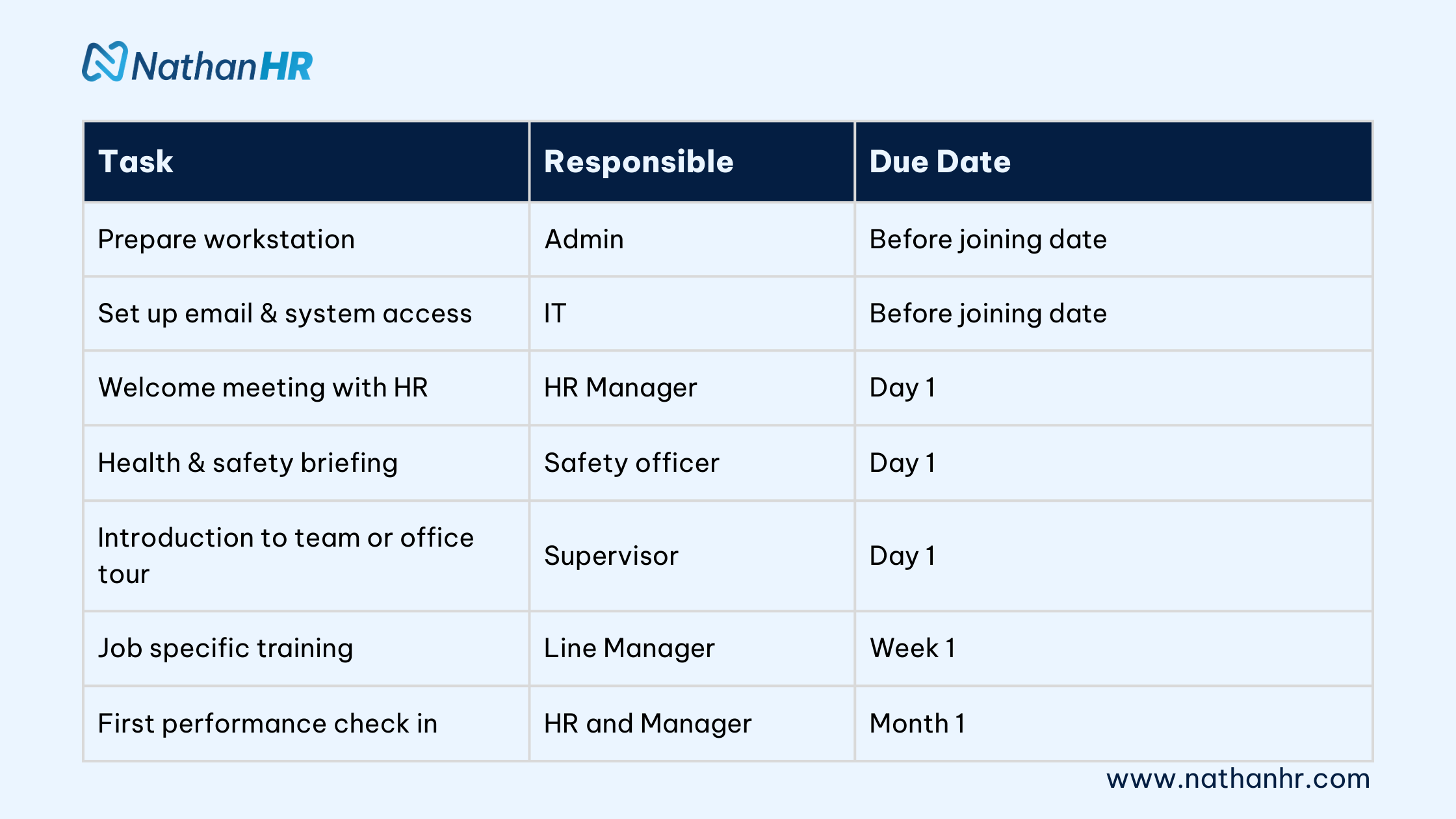
Day 1: Welcome, introductions, office tour, basic setup
Week 1: Role training, shadowing, first meetings
Month 1: Performance check-in, feedback session, ongoing learning plan
5. Make it Interactive
Include introductions to colleagues.
Assign a buddy or mentor to help them settle in.
Use both in-person and digital formats (e.g., a shared online checklist or HR portal)
6. Track & Follow Up
Get both the new hire and their manager to tick off items.
Have a midway review and an end-of-probation check.
Gather feedback to improve the checklist for future hires
7. Keep It Simple & Clear
Use plain language (avoid HR jargon)
Break tasks into short, actionable steps Include relevant links or attachments for quick access
Example of a Simple Induction Checklist
Conclusion
An induction checklist is more than just a to-do list, it’s a strategic HR tool.
In the UAE’s competitive and multicultural business landscape, a strong induction process helps you comply with regulations, integrate employees quickly, and build a positive work culture from day one.
When employees feel supported and informed, they’re more likely to stay longer, perform better, and become ambassadors for your brand.
Investing in a thorough induction checklist isn’t just good HR practice,it’s a smart business move.
Frequently Asked Questions
1. How long should an induction process last in the UAE?
It varies, but most companies spread induction over the first month. Some critical steps, like legal documentation and safety briefings, must be completed on day one.
2. Do I need to include UAE labour laws in the induction checklist?
Yes, it’s best practice to brief employees on their legal rights, contracts, working hours, and leave entitlements to avoid misunderstandings.
3. Can an induction checklist be digital?
Absolutely. Many UAE companies use HR software to manage onboarding, track checklist progress, and store signed documents.
4. Is an induction checklist only for full-time employees?
No, it’s equally useful for part-time, contract, and temporary staff to ensure consistency and compliance.
5. What’s the difference between induction and orientation?
Orientation is usually a one-off event, while induction is an ongoing process that helps employees fully integrate into their role and the company culture.